Recently, I was listening to a very well-known historian (Substack Link to Timothy Snyder in this particular interview I am referring here) about breaking things. The dsicussion was centred around the idea that it is, in fact, very easy to break things, no matter how brilliant one might think they are in the world and that also, as incredibly wealthy people become more cut off from regular, every day citizens, that it becomes even easier to break things, including society.
He went on to say, in a very gentle and thoughtful way as is his manner, that it is, in fact, incredibly difficult to build things. To build good things. Things that contribute to our society and build us up as a people, whether that’s government institutions, companies, leagues and organizations, safety nets and income assistance, social programming, health care institutions, education and advanced education, and more.
These are harder. These take time. Intention. Thought. Collaboration. Listening to differing ideas and opinions. Many of these things take patience, perseverance and just plain old grit to build.
It had me thinking, as I was listening, about cloth. It always comes back to cloth. But the act of building something. Of committing to something. These ideas are only in their infancy of forming and I have much to do with them but before they are lost completely to the void, I wanted to jot them down.
Doing the work of planning and organizing takes time and care. Again, listening. As we engage in fibre preparation, the fibres begin to tell us how they want to be best prepared. We can jam them into any form we want – comb a fibre best carded, create rolags when combing would be best and so on – but really understanding our materials and being a vessel along to way to helping those fibres, whether a blend or pure wool, to really sing is a skill.
The time to create that preparation to ensure the best spinning experience, because remember that the best preparation leds to a seamless spinning experinece, is important. To engage in fibre preparation is to really love it – it’s hard to force it if you don’t love it. But that investmest in our materials and fibres leads to amazing outcomes – fibre we actually want to spin, that creates amazing yarn that we want to work with to turn into cloth. This makes me think of those moments when deliberation and discussion seem so tedious. I don’t want to listen becuase I know best. But an alternative to that is that maybe we don’t know best and there is always more to learn.
When the spinning goes well, it seems almost easy – the yarn seems to create itself. And all of a sudden, we have miles of spun yarn. Finished and complete. But it didn’t come from nothing. It took time, care and attention. It took investment at the wheel or spindle to get it done. And it took perseverance again.
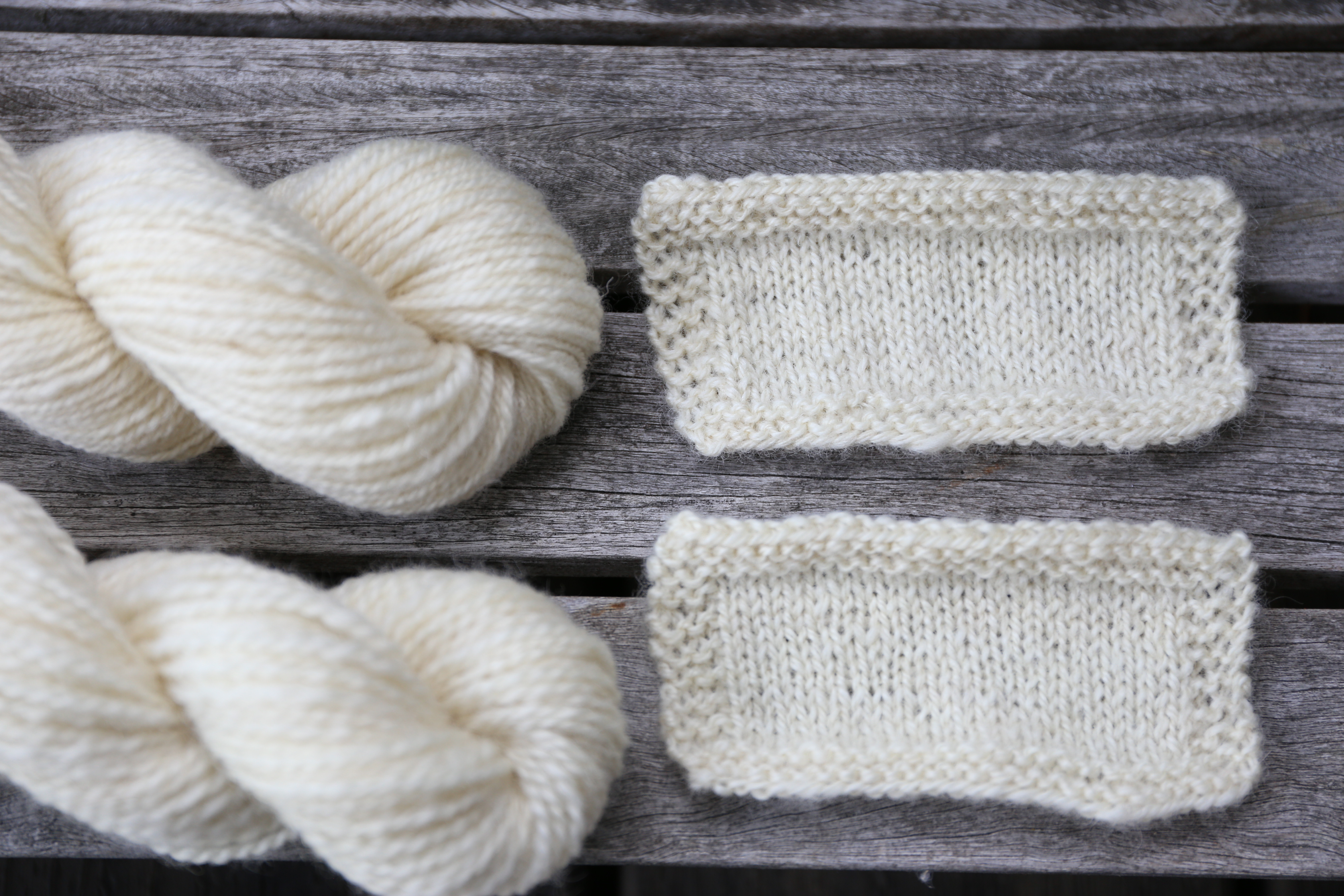
As sampling and swatching is completed to learn the yarn and figure out the best way to knit, weave or crochet it, more time, care and attention is needed. By this time, we know the issues well. We know what to expect. We know why we’re there and why this is important. We’ve invested in this fleece and fibre for both the enjoyment and learning opportunity to provides. Now, we listen again. What is the yarn telling us? What can we learn? How much can we really know the yarn before working alongside it to sample and swatch? What do we want in a finished item? How best to bring out those qualities and build it up?
And the hard work of creating cloth, of making it, is just beginning. Now we have to choose the needle or hook size, the sett on the loom, and what other materials might go with it – namely, other possible yarns (warp yarn or weft, colourwork yarns, silk-mohair to hold with and so many more choices) – all of which deserve and require a seat at the table.
The loom is warped. The knitting needles have been cast on. The cloth begins to emerge and we have built something that took a lot of time. Something that was hard. Something that sometimes felt needless and frustrating. But we stick to it because it’s meaningful. It’s hard work. It. Is. Important.
This post is not about knitting or weaving. Go vote.




Leave a Reply